CHAPTER-1
Communication
The term communication is derived from the Latin terms ‘communis’ and ‘Communicare’ that means mutual understanding or to make common.
Communication is the process of sharing ideas, information, feelings etc.
In a communication process, who give the information is called sender and who receive it is known as receiver.
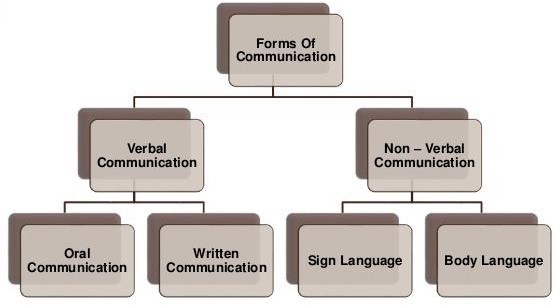
Types/ forms of communication-
Types of Communication based on Functions-
1) Verbal Communication- Communication that uses language (written or oral forma)
2) Non Verbal Communication- Communication that uses signs, symbols, body language, expressions, gestures, dress, sound etc.
Types of communication based on participants-
1. Intra personal communication: Communication within oneself.
2. Interpersonal communication: Communication within two persons.
3. Group Communication: Communication within a group of people.
4. Public Communication: Communication with a large number of people, e.g public meeting.
5. Mass communication: Communication with a very large number of people or simply mass people spread anywhere in the world.
Communication medium-
Traditional Media: e.g. letters, drama, folk songs, puppet, bhaona, nautanki etc.
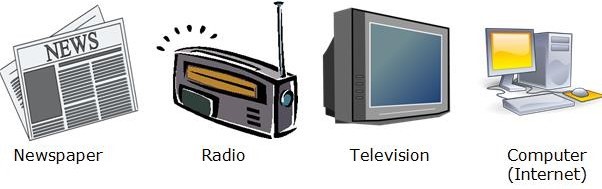
Modern Media: e.g, books, newspaper, telephone, radio, TV, film, internet, mail, mobile phone etc.
Mass media
• The tools through which communication with mass can be possible is called mass media (plural form of medium) or simply ‘media’.
Types of mass media
1. Print Media- News Paper, Magazine, Books etc.
2. Electronic Media- Radio, Television.
3. New Media- Internet, social media etc.
CHAPTER-2
JOURNALISM
Journalism is a discipline of collecting, analyzing, verifying and presenting news regarding current events, trends, issues and people.
The word Journalism is derived from the French word “journal” which came from the Latin root ‘diurnal’ that means daily.
Journalism is the activity of gathering, assessing, creating, and presenting news and information. It is also the product of these activities.
Journalism is the production and distribution of reports on the interaction of events, facts, ideas, and people that are the "news of the day" and that impacts society to at least some degree. The word applies to the occupation (professional or not), the methods of gathering information, and the organizing literary styles. Journalistic media include: print, television, radio, Internet, and, in the past, newsreels.
Ideal of Journalism:
The central purpose of journalism is to provide citizens with accurate and reliable information they need to function in a free society. This encompasses roles like helping define community, creating common language and common knowledge, identifying a
community’s goals and pushing people beyond self-satisfaction. This purpose also involves other requirements such as being entertaining, serving as watchdog and offering voice to the voiceless.
It has developed nine core ideals to meet the tasks:
· Journalism’s first obligation is to the truth.
· Its first loyalty is to citizens.
· Its essence is disciplines of verification.
· Its practitioners must maintain an independence from those they cover.
· It must serve as an independent monitor of power.
· It must provide forum for public criticism and compromise.
· It must strive to make the significant interesting and relevant.
· It must keep the news comprehensive and proportional.
· Its practitioners must be allowed to exercise their personal conscience.
JOURNALIST
One who practices Journalism is known as journalist.
They may be Reporter, Editor, Photographer, Videographer, Video editor, Anchor or any other technical person.
A Journalist may be a full time professional or freelancer.
MEDIA OF JOURNALISM
Print- News paper, magazine
Electronic- Radio, TV
Internet- E-papers, E-magazine, Social Media etc.
CHAPTER-3
HISTORY
World History
Acta Diurna' was the first newspaper published in Rome, around 59 BC. In 1605, the first printed weekly newspaper published in Antwerp was called Relation. Johann Carolus (1575-1634) was the publisher of the Relation. The `Relation' is recognized by the World Association of Newspapers, as well as many authors, as the world's first newspaper. In 1702 Elizabeth Mallet published the first edition of The Daily Courant, the world’s first daily newspaper.
Indian History
Bengal Gazette was the first news paper published in India. It was also known as Calcutta General Advertiser. It was published in 1780 by James Augustus Hicky. By his name, the paper was popular as Hicky’s Gazette. It was published till 1782.
Ø The first newspaper in Indian language was Samachar Darpan, which was published in 1818 by the missionaries.
Ø Before that monthly magazine Digdarshan was published.
Ø Raja Rammohan Roy, the founder of Indian Press published “Sambad Kaumudi” (1821) and “Mirat-ul-akhbar” (1822).
AssamHistory
In Assam the first News paper was published by a missionary named Nathan Brawn, a printer by profession. ARUNODOI, the first Assamese news paper was published in 1846 from Sivasagar. Arunodoi was published monthly in two types, Smbad Patra (News paper) and Gyan Bhandar (Magazine). It was published till 1880. The first daily assamese news paper was DOINIK BATORI, published in 1935 by Sivaprasad Baruah, from Jorhat and edited by Nilamoni Phukan.
TELEVISION HISTORY
EVOLUTION OF TELEVISION
The idea of television existed long before the actual invention of television. Several inventors were working on the creation of a technology which could transmit sound as well as visuals. Though many pioneers have contributed to make it possible, John Baird is generally regarded as the father of television. British Broadcasting Corporation (BBC) of Britain began the first television service in 1936. If you have a satellite or cable connection, you will be able to watch BBC, the world’s oldest television broadcaster. By 1939, television broadcasts began in the United States also. These two countries were clearly ahead in the race. Other countries began television broadcasting on a wide scale only by the 1950s. Though the Second World War slowed down the rapid development of the new medium, the post war years made up for it. We have seen how television came into existence.
However, early television viewing was not like what we see on a television set today. It was quite primitive. The limitations of the early camera forced the actors and anchors to work with impossibly hot lights. Imagine trying to read news with full make up under a blazing light. The early television broadcasts were all black and white. The first successful programme in colour was transmitted by Columbia Broadcasting System (CBS) in USA in 1953. The television set became one of the important mediums of entertainment with the advent of several popular shows. Television gradually matured as a medium during the next two decades. From being “radio with pictures” it acquired a
unique style of its own. As a result of this, this phase is often called the “golden age” of television.
DATES TO REMEMBER
1936 - British Broadcasting Corporation (BBC) of Britain began the first television service of the world
1939 - Television broadcasts began in US
1950s - Other countries began television broadcasting on a wide scale
1953 - The first successful programme in colour was transmitted by CBS in USA
HISTORY OF TELEVISION IN INDIA
Television began in India on 15th September 1959 as an experiment. There were only two one-hour programmes a week, each of one hour duration. Imagine a television set working for only two hours a week. But, that was the case in the early years of television. All India Radio handled these initial broadcasts.
The early programmes on these experimental broadcasts were generally educational programmes for school children and farmers. Several community television sets were set up in Delhi’s rural areas and schools around Delhi for the dissemination of these programmes. By the 1970s, television centers were opened in other parts of the country also. In 1976, Doordarshan became a separate department.
Satellite Instructional Television Experiment (SITE). It was conducted between August 1975 and July 1976. Under this programme, the Indian government used the American satellite ATS-6 to broadcast educational programmes to Indian villages. Six states were selected for this experiment and television sets were distributed in these states. SITE was an important step taken by India to use television for development. The programmes were mainly produced by Doordarshan which was then a part of AIR. The telecasts happened twice a day, in the morning and evening. Other than agricultural information, health and family planning were the other important topics dealt with in these programmes. Entertainment was also included in these telecasts in the form of dance, music, drama, folk and rural art forms. A major milestone in the history of Indian television was the coverage of the Ninth Asian Games in 1982. Doordarshan provided national coverage for the first time through the satellite INSAT 1A. Also, for the first time, the transmission was in colour. In addition to the domestic transmission, Doordarshan was also providing content for the broadcasters of many other countries. After 1982,there was a huge increase in the live coverage of sports by Doordarshan .
By 1983, government sanctioned a huge expansion of Doordarshan. Several new transmitters were set up throughout the country. Thus towards the end of 80s around 75 per cent of the population could be covered by the transmitters. Many of the programmes of Doordarshan like Hum Log, Buniyaad and Nukkad were immensely popular.
PRASAR BHARATI:
In 1997, Prasar Bharati, a statutory autonomous body was established. Doordarshan along with AIR was converted into government corporations under Prasar Bharati. The Prasar Bharati Corporation was esablished to serve as the public service broadcaster of the country which would achieve its objectives through AIR and DD. This was a step towards greater autonomy for Doordarshan and AIR. However, Prasar Bharati has not succeeded in shielding Doordarshan from government control.
Today, about 90 per cent of the Indian population can receive Doordarshan programmes through its network. From its humble beginning as a part of All India Radio, Doordarshan has grown into a major television broadcaster with around 30 channels. This includes Regional Language Satellite Channels, State Networks, International Channel and All India Channels like DD National, DD News, DD Sports, DD Gyandarshan, DD Bharati, Loksabha Channel and DD Urdu.
EMERGENCE OF PRIVATE TELEVISION CHANNELS
Generally satellites are used for communication or research purposes. Man made satellites are objects which are launched to orbit the earth or any other celestial body. The introduction of communication satellites has improved the situation greatly. Star TV, Aaj Tak, NDTV, Zee etc are a few of the many television channels available to us today. In the earlier days, Doordarshan had a monopoly as it was the only channel available to the Indian television audience. This changed in the 1990s with the arrival of private channels. The coverage of the Gulf War by the American news channel, Cable News Network (CNN) propelled the arrival of satellite television in India. Satellite dishes were used to catch the CNN signals and cable operators took to satellite broadcasting immediately.
ADVENT OF PRIVATE TELEVISION CHANNELS IN INDIA
Hong Kong based STAR (Satellite Television Asian Region) entered into an agreement with an Indian company and Zee TV was born. It became the first privately owned Hindi satellite channel of India. The agreement between STAR and Zee did not last long. But the Indian television audience was waiting for a shift from the monopoly of Doordarshan and soon a number of private channels emerged. The Supreme Court ruling of 1995 which stated that the airwaves are not the monopoly of the Indian government boosted their growth. Several regional channels also came into being during this period. Sun TV (Tamil), Asianet (Malayalam) and Eenadu TV were a few of them. Today almost all major Indian languages have television channels in them. Which is your favourite regional
channel? Apart from the regional channels, a host of international channels like CNN, BBC and Discovery are also available to the Indian television audience. With different categories of channels like 24 hour news channels, religious channels, cartoon channels and movie channels, there is something for everyone to watch.
TV In Assam
TV first introduced in Assam in 1982.
DD Guwahati was started in 1985.
First private local channel was PRAG (2001)
The first private satellite channel was NE TV, which was established in 2004.